
There are a lot of products out there. A lot of them tell you that they are good at what they do and are sustainable in some way. The trouble is that they are very hard to use and install.
Author Archives: Peta Guy

The Future Eaters
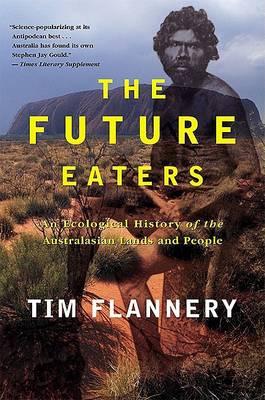 The Future Eaters
Ecology
Reed New Holland
1994

Humans first settled the islands of Australia, New Zealand, New Caledonia, and New Guinea some sixty millennia ago, and as they had elsewhere across the globe, immediately began altering the environment by hunting and trapping animals and gathering fruits and vegetables. In this illustrated iconoclastic ecological history, acclaimed scientist and historian Tim Flannery follows the environment of the islands through the age of dinosaurs to the age of mammals and the arrival of humanity on its shores, to the coming of European colonizers and the advent of the industrial society that would change nature's balance forever. Penetrating, gripping, and provocative, The Future Eaters is a dramatic narrative history that combines natural history, anthropology, and ecology on an epic scale. "Flannery tells his beautiful story in plain language, science-popularizing at its Antipodean best." -- Times Literary Supplement "Like the present-day incarnation of some early-nineteenth-century explorer-scholar, Tim Flannery refuses to be fenced in." -- Time
Quotes from The Future Eaters
"Most people are still unaware that Australia has been inhabited by modern humans for longer--indeed possibly twice as long--as Western Europe. Most people are also unaware of the different histories of other Australasian people. Many, for example, think of Australian Aborigines and New Zealand Maoris as both being indigenous people with similar origins. Yet who is more similar to whom? Aborigines arrived in Australia from South- East Asia at least 40,000 and more probably 60,000 years ago. They travelled on the most basic of watercraft and arrived without domesticated plants or animals. Maoris arrived in New Zealand from elsewhere in Polynesia between 1,000 and 800 years ago aboard superb ocean-going vessels, which made landfall after a long and deliberate voyage of discovery. They brought along their domestic plants, dogs and rats, which had been gathered from such diverse places as China, South-East Asia and South America. Maoris were followed some 650-450 years later by Europeans who, while they possessed inferior ocean-going craft (Cook himself admired the faster, longer and superbly maneuverable Polynesian catamarans when compared with his own Endeavor, also arrived on deliberate voyages of discovery. Within 200 years they too had settled New Zealand and populated it with their own diverse domesticated plants and animals."
"What is more, whenever an animal ate a plant, the nutrients were returned quickly to the vegetation, for within a day or so they would reappear, composted and laced with nitrates, in the form of dung. If the large animal communities that exist elsewhere are any guide, this dung would have been the lifeblood of guilds of now-extinct Australian dung beetles. Fighting avidly for their share, the dung beetles would have buried and consumed the droppings, hastening the recycling of nutrients to the plants.
"In such an ecosystem nutrients can be recycled spectacularly quickly. Thus, even though the soil may be relatively poor, the rapid turnover of nutrients compensates. Because rapid turnover of nutrients is critical to the success of the system, it is not in the plant's interest to lace its leaves with toxins which would inhibit herbivores, for it is far better to keep the nutrients moving. Even more critically, very few nutrients are lost in this process. It is a tight, fast and self-contained nutrient-recycling system.
"When compared to the coevolved guilds of large herbivores, fire is a far inferior way of recycling nutrients. It promotes plants that originated in the nutrient-starved heaths. There, plants must lace their leaves with chemicals in order to defend from browsing herbivores the few nutrients which they have accumulated. These toxins may also inhibit the breakdown of plant matter by decomposition so nutrients are recycled much more slowly than in other environments, being released from dead plant matter only by fire.
"Because of this, extremely poor soils promote a nutrient- hoarding strategy, which in turn encourages fire. Even worse, when fire does finally consume the plant matter, making its nutrients available to living plants, the nutrients leak out of the system. It has been estimated, for example, that for every hectare of grassland burned in the Katherine region of the Northern Territory, four and on half kilograms of nitrogen is lost as nitrous oxide due to combustion. On Fraser Island it has been calculated that between 30 percent and 51 percent of sulphur is lost through volatilization from sclerophyll forest as a result of fire. Other nutrients are lost because they are converted into inorganic compounds in the ash and, if heavy rain follows fire, any remaining nutrients are easily washed into watercourses and carried off. Worse, the nutrients are not alone in being vulnerable to loss through water transport. For after a fire has bared the soil, wind can strip it away in massive sheet erosion."
"The outcome of this local evolution was depressing; for all populations, with the exception of the Tasmanian Aborigines, were to become extinct thousands of years before the arrival of Europeans."
"The sole surviving Aboriginal population inhabiting a temperate Australian island was that living in Tasmania. Tasmania is large enough to support some 5,000 Aborigines living traditional lifestyles. This is some 10 times more than the absolute minimum size necessary for long-term survival. But is a population of 5,000 large enough to maintain a complex material culture? Recent archeological discoveries suggest that it was not.
"When the first reports of the Tasmanian Aborigines reached Europe they created intense interest. Europeans thought that their simple tool kit and lifestyle meant that they were a very primitive people. For a very long time after, it was widely believed that these apparently truly primitive people had survived in their remote corner of the world because they had not had to compete with more advanced races.
"The French savants of the Baudin Expedition, who observed the Tasmanians in 1802, were amazed that even though the Tasmanians lived in an often bitterly cold climate, they lacked clothing. Extraordinarily, they also lacked the ability to make fire. Mannalargenna, one of the last of the Tasmanian Aborigines to live a traditional life, told of what would happen if a group's fire was extinguished. He said that people had no alternative but to eat raw meat while they walked in search of another tribe. Significantly, one of the universal laws among the Tasmanians was that fire must be given whenever requested, even if the asker was a traditional enemy who would be fought after the gift had been given.
"The French were also struck by the fact that the Tasmanians did not eat fish, even though they were abundant in Tasmania's coastal waters. Francois Peron records that when members of the Baudin Expedition offered some fish which they had caught, the Tasmanians expressed amazement and horror. This was not an isolated instance, for earlier, in 1777, members of Cook's third expedition recorded that Tasmanians reacted with horror or ran away when fish were offered to them.
"There are some other quite extraordinary features of Tasmanian culture. The Tasmanians, for example, had no hafted implements (such as axes), no implements made of bone, no boomerangs or spear throwers, no dingos and no microlithic stone tools. Indeed, their entire tool kit seems to have consisted of about two dozen kinds of objects."
"It is easy to see how the limited material culture of the Tasmanians could seduce the savants of the eighteenth and nineteenth centuries into classifying the Tasmanians as the world's most primitive people. Not surprisingly, the anatomists of the day had an almost insatiable demand for corpses. Through dissection, they hoped to find additional evidence supporting the idea that the Tasmanians were primitive; maybe even a kind of living, missing link. Needless to say, these anatomical studies yielded no such evidence."
"Until very recently, many people found no reason to doubt the conclusions of nineteenth century science concerning the Tasmanians. But detailed archeological research, much undertaken only in the last few decades, has now shown conclusively that there was nothing primitive about the Tasmanians at all. They were, instead, a highly specialized offshoot of the Australian Aborigines, whose culture evolved under the extraordinary constraints that 10,000 years of solitude would place on any small band of humans.
"The most striking evidence concerning the evolution of the culture of the Tasmanians has come from the study of campsites occupied over the last 7,000 years. Deposits that date to 7,000 years ago or more are full of bone tools, including awls, reamers and needles. There seems to be little doubt that these implements were used for sewing, probably to make skin cloaks similar to those used by the Aborigines of southern Australia right up until the nineteenth century.
"The variety of bone tools found in Tasmanian middens dwindles with time, until eventually, about 3,500 years ago, the last of them disappear from the archaeological record. This suggests that stitched clothing was lost from the material culture of the Tasmanians at about this time.
"Interestingly, the older archaeological sites show that fish--although despised as a food in historic times--once formed an important part of the Tasmanians' diet. Evidence from some sites suggests that fish made up about 10 percent of their diet in the past. . . . Then suddenly, about 3,500 years ago, the remains of fish cease to appear in refuse dumps."
"The most plausible explanation [for the simplification of the material culture of the Tasmanians] seems to lie in the unique isolation and small population size of the Tasmanians. The theory goes something like this. A small group of people are less likely to come up with technological innovations than a larger group. If the group is completely isolated, then new ideas cannot reach it. Because of this, innovation in material culture is slowed. Because the population is small, activities and knowledge may be lost simple through the early death of skilled people before they can pass their skills to the next generation.
"Losses such as that of clothing and the ability to make fire may have resulted from rare, early deaths occurring over a long period of time. The 5,000 Tasmanians lived scattered in small groups. It may be that only one or two people in any one group had all the skills necessary to make bone needles and prepare skins. Over 12,000 years there is a high chance that the few such specialists in any one area would, at some stage, die before they could pass their skills on. Repeated chance events like this might have led to the loss of many skills that require specialized knowledge.
"If the population is small enough, there may be strong evolutionary pressure to dispense with high-risk activities. This is because risks that are acceptable for larger populations can threaten the very survival of smaller ones. The loss of fish from the Tasmanian diet may be an example of a high-risk activity that is strongly selected against and thus lost, in small populations."
"Eating fish can be a risky business, because occasionally a dinoflagellate bloom known as a 'red tide' can lead to mass poisonings. The simultaneous death of hundreds of people in a large human population is a great personal tragedy, but it poses no threat to the survival of that society because the statistical chance of losing all members of one age group or sex is tiny. Such a poisoning in a small population, however, can be a disaster for the entire group. This is because, through chance, it may kill a significant proportion of the women of child-bearing age, or all of the older and more knowledgeable individuals. In order to avoid such catastrophic events, extreme conservatism may be selected for in small societies. This is because in evolutionary terms it may be better to forego the benefit gained from eating such 'dangerous' food as fish, rather than risk an extremely rare but catastrophic poisoning event."
"A remarkably large body of evidence exists concerning the fate of the moa, for over the length and breadth of New Zealand, but particularly in prime moa habitat in the south-east of the South Island, are found Maori cooking sites which are literally packed with moa remains. Hundreds of sites are known. Some consist of only a pile of gizzard stones and a knife, indicating the spot where a moa was killed and gutted. Others consist of a rock shelter where a moa haunch was cooked, while yet others were the final resting place of tens of thousands of moa, and cover tens of hectares.
"One of the most extraordinary sites was discovered among sand dunes at Kaupokonui in the Taranaki District of the North Island. There, the remains of at least three species of moa, along with 55 other species of bird (many now extinct) have been found in and around ovens. Piles of uncooked and articulated heads, necks (some broken in such a way as to suggest that they had been wrung), ribs, vertebra and pelves mark butchering sites.
"Analysis of the site suggests that the wastage of meat was enormous, which indicates that protein was available in surplus at the time. Gizzard stones are rare, suggesting that the great birds were gutted where they were killed, their innards being discarded before the body was carried to the butchering site. The piles of uncooked heads, necks and other parts had clearly been left to rot, while only the leg bones are often found in oven pits, indicating that the haunches were the preferred meat.
"Another great butchering site has been found near Wairau Bat in the north of the South Island. It has bee estimated that nearly 9,000 moa were killed and almost 2,400 eggs destroyed, at this site alone. At yet another site, Waitaki Mouth in the Otago District, it is estimated that between 30,000 and 90,000 moa were killed. Several other large sites exist.
"Several things are clear in an examination of these sites. The first is that they were occupied by very large numbers of people. Indeed, following the extinction of the moa, such dense aggregations of people were never to inhabit these areas again until after the arrival of Europeans. The second is that meat was in superabundance and that much was wasted. Entire moa legs have been found baked in ovens that were never opened. Piles of discarded remains included parts of moa bodies that contained large amounts of meat, while whole bodies were not infrequently left to rot. Typically, about a third of the meat available in moa carcasses was never used. The archaeologist Cassels gained the impression from his excavations of the Kaupokonui site that 'the waste is astounding'.
"It is true to say that the rise of fire has transformed Australia. Yet its effects have been modified through Aboriginal control of the firestick. When control was wrested from the Aborigines and placed in the hands of Europeans, disaster resulted.
"Because the historic role of fire in ecosystems is so much better understood than its prehistoric role, it is best to begin with an examination of fire as it was used by Aborigines when Europeans first arrived in Australia.
"The use of fire by Aboriginal people was so widespread and constant that virtually every early explorer in Australia makes mention of it. It was Aboriginal fire that prompted James Cook to call Australia 'This continent of smoke'. Tasman, as early as 1642, saw smoke billow into the sky for days at a time, as did other early explorers. But it was that most poetic of explorers, Ernest Giles who, during his travels in Central Australia, gave us the most vivid image of the inseparability of fire and Aborigines:
The natives were about, burning, burning, ever burning; one would think they were of the fabled salamander race, and lived on fire instead of water.
This is another must read book.
Guns, Germs and Steel
Civilization
Random House
1998
480
This book answers the most obvious, the most important, yet the most difficult question about human history: why history unfolded so differently on different continents. Geography and biogeography, not race, moulded the contrasting fates of Europeans, Asians, Native Americans, sub-Saharan Africans, and aboriginal Australians. An ambitious synthesis of history, biology, ecology and linguistics, Guns, Germs and Steel is one of the most important and humane works of popular science.
Is a superior culture the reason for Western dominance of the world over the past two centuries? Or was it just circumstance?
This book has the answers. It surprised me in a way and yet what I read made immediate sense.
Another must read. I read it after Collapse by the same author and am glad I did.
Collapse – How Societies Choose to Fail or Survive
Environmental policy
Lane, Allen
2005
575
From groundbreaking writer and thinker Jared Diamond comes an epic, visionary new book on the mysterious collapse of past civilizations - and what this means for our future. Why do some societies flourish, while others founder? What happened to the people who made the forlorn long-abandoned statues of Easter Island or to the architects of the crumbling Maya pyramids? Will we go the same way, our skyscrapers one day standing derelict and overgrown like the temples at Angkor Wat? Bringing together new evidence from a startling range of sources and piecing together the myriad influences, from climate to culture, that make societies self-destruct, Collapse also shows how unlike our ancestors we can benefit from our knowledge of the past and learn to be survivors.
This is one of the best books I have ever read. It covers a broad scope and does so in considerable depth and with what looks to be sound analysis.
The part that resonates the most to me is the discussion of Easter Island. How, for 300 years the surplus of food allowed through intensive agriculture funded an allocation of 25% of the island’s resources towards building the famous statues. Ironically, the deforestation that was driven by the need for timber to move and erect the statues led to the destruction of local birdlife, access to fisheries and the intensive agriculture. The largest volcano on the island translates as “the place to get canoes”. Without the trees to make canoes, tuna and dolphin was no longer on the menu. All the native tree species were wiped out. on Page 114 is the quote I like the most “What did the Easter Islander who cut down the last palm tree say while he was doing it?”. “Jobs, not trees!” or “Technology will solve our problems, never fear, we will find a substitute for wood” or: “we don’t have proof that there aren’t palms elsewhere on Easter, we need more research, your proposed ban on logging is premature and driven by fear-mongering”.
It puts things nicely in context. They were not much different to us at all.
Most importantly in this book, there is a solid discussion about why societies make the choices they do. It covers not just the failures but successes too, comparing and contrasting similar situates where there were the same challenges and different decisions and outcomes.
The final message for me is that poor long-term choices eventually come up against a limit or challenge that is too great to allow a simple change of some detail or other. A choice to do something different or suffer the (often gruesome) consequences must be made.
A must read.
Energy Efficient Home
A few people wanted to know a bit more about my house. It is interesting in a number of ways so I will make a start. This is a very long post/article. Pictures to come. Continue Reading →
Green Power and real change
Recent investigations into Green Power claims make me think… Why should we choose some institutionalised approach to investing in more environmentally friendly energy sources? Why can’t we buy direct or directly invest in the generation of solar or other renewable power?
The people selling the Green Power products are not exactly in favour of it. They are committed to coal and other traditional methods of generation. BUT they are happy to have use pay the extra money to buy something that we might think is helping the environment. Of course, caveat emptor – we need to check up on them to see that we are getting what we think we are and not subsidising the things we are hoping to change.
One reason is that private or privatised Government corporations now own the public infrastructure that was paid for in the past by the public purse. They are able to make decisions that are not subject to scrutiny like Government is. Then we have the energy retail business that was supposed to be “contestable”. It is not really and Green Energy shows that well. Even if Green Electricity is cheaper to generate and buy, it will remain more expensive in the pricing model offered – it is declared to be more expensive (because we will pay it) and that is the end of the discussion.
Now, wouldn’t it be nice to be able to invest in a small solar thermal or wind generator that sells the electricity to the grid and just buy your electricity at normal prices? Sure, there is a risk in that. It might cost you extra because of troubles with the generator or the conditions might be bad for a long time and you will not earn much. The upside is that you know you are helping with genuine reduction in the need for fossil fuel and you know you are not being deluded by fancy marketing spin (assuming you are involved in the generator more actively). What would it cost to do this? Lets say you had a 1/10th share in a $200k generator. $20k is a big investment but it will return you money that covers the margin between normal electricity prices and the premium prices for “Green Power”. On top of this, if electricity prices rise, you will get a higher return. When the Carbon Tax/Offset/Levy comes in you can sell credits and make more money. It could be a new kind of cottage industry for those who have the ability to get involved as a true investor in sustainable energy.
House-work
Over the past four weeks I have had a lot of work done around the house. The kitchen was refurbished last weekend. Double glazing was done. Skylights were installed in the large room and kitchen. New refrigerator and dishwasher, sink etc. Old curtains replaced with blinds. Finally, a solar powered heating system for the house. All this will make the house much more energy efficient. It should save at least 25% of the energy use in the house. How?
- The heating will keep the house at about 20 degrees during the day across Winter. That on its own will save quite a bit of energy for heating the house up. Overall, the house is warmed already so that when the gas heater (a small “room heater”) comes on it has much less to heat.
- The skylights reduce the amount of time that I will need to use electric lighting. Previously, I needed to have the lights on most mornings because of the house design blocking direct sunlight from the East. Later in the day the same thing would happen. In the kitchen, I needed a light to see properly during the day because it is on the South and with plants close to the window. Curtains over the windows meant that less light came in even when the curtains were opened.
- Double glazing means that far less heat is lost through the windows. This house has a lot of windows. On the South side heat gain and loss through the windows could only be stopped by closing curtains. That meant running lights… and a less pleasant lifestyle, unconnected to the outside. Now, I can have the blinds open and feel like I am in the open. -3 degrees outside and 18 degrees inside and no feeling of cold at all in the morning.
- Kitchen appliances were a problem. The refrigerator was too big and that meant it was always turning on and off. A smaller one with a higher efficiency rating means that I will use 200kWh less electricity a year. The dishwasher I had could only be connected to a cold water tap. The one I have now can be connected to hot water. This means that the old one heated the water with an electric element slowing the wash and also using more energy than desirable. When I install the solar hot water later this year, the benefit will be even greater because the water is heated by the sun rather than fossil fuels.
- With heavy curtains on windows the house could be kept quite warm in Winter and cool in Summer. However, the curtains still blocked 20% of the light and heat when I opened them on a Winter day to let the sunlight in. This is overcome completely with the blinds I now have that let the light in and only need to provide privacy and/or light control for me rather than holding the heat in or out.
- In the main room (dining and lounge/living) the new skylight (called a roof window by some) lets more sun in during the winter and can regulate the amount of light in the Summer. It also opens so that I can use it to vent hot air through the cathedral ceiling and get a flow through that is called a thermal vent. In Canberra the overnight temperature gets down around 15 degrees overnight even when it is 35 during the day, due to being inland and over 600m above sea level.. The cooling effect that this has should make it much more comfortable and the need for any cooling rare. This is especially so because of the double glazing.
All this is good but there are more things to do. Four more windows need to be double glazed. I hope to have solar hot water will be installed in around October to November. I will be installing a type of awning over the narrow Westerly windows to keep the heat out in Summer (they will be open in the cooler months). The awnings will be a type that is easily raised and lowered and looks nicer than the normal open awnings. I will also be putting a similar thing on the North facing pergola to act as extended eaves. This will provide a blockout for Summer so that there is no heat in the house while allowing the heat in fully when I want it. Right now, I have the pergola covered with Wisteria and grapevines. I will remove the wisteria which will mean that there will be less damage to the gutters and pergola as well as better sunlight in April/May each year when the wisteria still has leaves but the house needs the sun. I might write a bit more about the work later this week. Right now, I will just enjoy it all.
Imperium
Imperium
Historical fiction
Vintage
2006
403
Historical fiction
Vintage
2006
403
This is another good book from Robert Harris. It is focussed on the life of Cicero in his time as a public figure. While Cicero is interesting for achieving high office without a power base, the descriptions of Roman life and politics are what I like the most. Narrated from the perspective of an elite slave, it shows how little things have changed in politics. It shows how much has changed socially. Then there is that broad canvass of the Roman Empire and just how civilised they were at one level and yet savage at another. The treatment of Roman citizenship was the first time it became clear to me how much this concept meant at the time. I was reminded of my reading of Gibbon and how the Enlightenment sparked a renewed interest in the Greek and Roman concepts of Republic and citizenship. How all that resulted in The Terror and Napoleon. I was also reminded of how excess wealth gets used to create power. That power can be used for many purposes and those are not much different today to 2000 years ago. The writing is again something that made me read until far too late at night. I read this reasonably large book over two nights and an afternoon. It left me wanting more.
Sherston’s Progress
Fiction
Simon Publications
2004-02-01
280
"Third volume of the famous WWI war novel following ""The Memoirs of a Fox-hunting Man"" and ""The Memoirs of An Infantly Officer""."
This is the third in a series of books by Siegfried Sassoon. The first is called Memoirs of a Fox Hunting Man and is an enchanting description of Edwardian England that is safe and secure in its isolation from world turmoil. The tranquil and genteel country estate life of the gentry that focuses on a young man’s sporting achievements is set against a backdrop of the impending Great War. The chilling unpreparedness for what was to come and the human warmth that pervades the training of a cavalry regiment in the English heartland makes the known murderous events so much more poignant. The second book Memoirs of an Infantry Officer retains the gentleness of the preceding book but has the sharp and jagged edges of trench warfare protruding from its pages in a way you could imagine it happening in the trenches. Simple descriptions of horror juxtaposed against the memories of home and a better life tumble into serious questioning of the morality of war and the repulsive indifference of the aristocracy to suffering of ordinary soldiers. Ben Elton wrote a book, The First Casualty that seems to draw inspiration from Sassoon. It is easy to see how the writing of Sassoon and Wilfred Owen has coloured our understanding of the Great War. The final book, Sherston’s Progress, takes us into a world that does not understand what is happening in the trenches, sees the casualties and deaths as something that is “the Kaiser’s fault” rather than the result of outdated aristocracy that has not kept up with the changes of the past 30 years. 30 years when there was more technological advance than in the previous millennium. Changes in the way that ethnic groupings saw themselves as having no allegiance to Emperors, Sultans, Kings or any other imperial powers imposed upon them by force. Changes in the way that middle classes wanted political power to go with their increasing economic power. Changes that were modern rather than mediaeval. The final book was written when the Nazi rise to power was under way. Discussions of the intense conflict between a pacifist sentiment that you do not like killing a kindred spirit (possibly even a cousin) and a sense of duty to defend a beloved way of life that meant so much in your youth. The tension between duty and harsh reality. Loss of faith in the fundamentals of your own culture. A yearning to express the horror and yet uncanny beauty of the extremes generated by mechanised war. All through the prism of time. Written in the third person, this is extremely auto-biographical. How else could one write of such experiences? CEW Bean experienced trench warfare first hand and wrote about it from the perspective of others. Very few could write personally until their latter years. I recognise the language used from my grandparents and great aunts and uncles. An unsufferable loss of a generation of young men … then another in the subsequent World War. Is it any wonder that those generations took refuge in post War consumerism and looked to find comfort?

Research on WWII
Looking through a lot of online resources, I have been able to get a sense of what my father experienced during his time in the army. There is a book that I need to read called Green Shadows which is a history of the 1st and 2nd New Guinea Battalions where he served in the last months of the war. The ACT Library has it and I can borrow it on Monday. It is clear that he enlisted relatively late – 10 December 1932. This was because he was in an essential occupation, (brick and tile making?) I think. Continue Reading →